



« Previous Plant | Next Plant »
Sparganium americanum
Lesser bur-reed
More About Lesser bur-reed
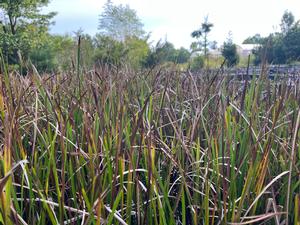
Sparganium americanum, Lesser bur-reed, is one of several native species of this distinctive native plant. Though looking like grasses or sedges, they are neither, being in their own family (Sparganiaceae). Sparganium americanum is smaller, reaching about 2'. The Great bur-Reed, S. eurycarpum, can reach 7' tall. The "burs" are soft-prickly and not dangerous. Do no confuse them with the unrelated Sandspurs (Cenchrus sp.). Lesser bur-reed grows in shallow water or flooded soils. Several animals feed on both their seeds and leaves. Waterfowl enjoy the seeds. In addition to providing food and habitat, these plants are one of many species useful for improving or maintaining water quality by absorbing nutrients and stabilizing muddy areas.
 |
|
Bloom Color
GreenSparganium americanum Characteristics & Attributes
|
Exposure
|
Mature Height
|
Spread Characteristics
|
Season of Interest (Flowering)
|
||||||||||||||||||||||||||||
|
Season of Interest (Foliage)
|
Pond Zonation
|
Foliage Color
|
Wildlife Benefits
|
||||||||||||||||||||||||||||
|
Critter Resistance
|
Wetland Indicator Status
|
Plant Type
|
Attributes
|
||||||||||||||||||||||||||||
|
USDA Hardiness Zone
|