



« Previous Plant | Next Plant »
Sisyrinchium angustifolium
Blue Eyed Grass
More About Blue Eyed Grass
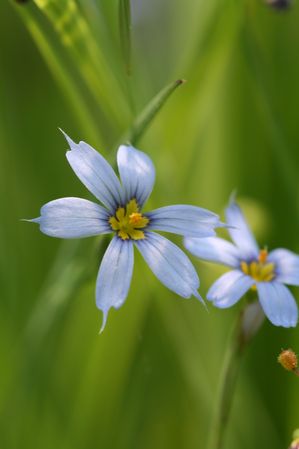
Sisyrinchium angustifolium, Blue-Eyed Grass, grows in moist, well-drained soil in damp open woods, slopes, and along stream banks in full sun to part shade. Despite its grass-like foliage, the Blue-Eyed Grass belongs to the iris family, not the grass family. Sisyrinchium angustifolium is favored due to its violet-blue flowers and branched flowering stems blooming from May to June. Blue-Eyed Grass is a clump-forming perennial that features a compact tuft of narrow grass-like leaves growing 1' tall. Best when naturalized in informal garden areas such as cottage gardens, woodland gardens, wild gardens or native plant areas. Blue-Eyed Grass may also be used in border fronts and rock gardens or even as an edge plant for pathways or walks.
 |
|
Bloom Color
BlueSisyrinchium angustifolium Characteristics & Attributes
|
Exposure
|
Mature Height
|
Spread Characteristics
|
Season of Interest (Flowering)
|
||||||||||||||||||||||||||||||||
|
Season of Interest (Foliage)
|
Pond Zonation
|
Foliage Color
|
Wildlife Benefits
|
||||||||||||||||||||||||||||||||
|
Critter Resistance
|
Wetland Indicator Status
|
Plant Type
|
Attributes
|
||||||||||||||||||||||||||||||||
|
USDA Hardiness Zone
|